

The Aviator online game has fundamentally reshaped the crash game genre, moving beyond simple random number generation to a system built on a provably fair multiplier curve. This guide is a technical manual for its mechanics, from the foundational algorithm to the strategic calculus of bet management.
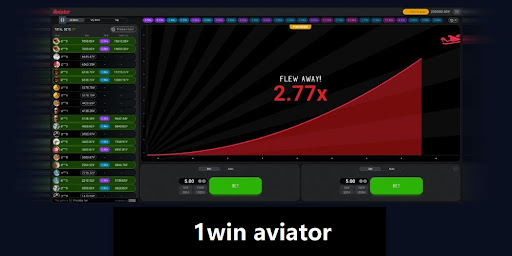
Before engaging, understanding these core parameters is non-negotiable for a technical approach.
- Provably Fair System: Every round’s outcome is predetermined by a seed and can be independently verified.
- Instantaneous Action: The core loop—bet, watch multiplier climb, cash out—is sub-second. Reaction time is a key variable.
- Multiplier Function: The ‘curve’ follows a logarithmic-like random distribution; true RTP is typically set between 97% and 99% via the house edge built into the crash point probability.
- Independent Rounds: No round’s outcome influences another. Martingale-style progression systems carry a high risk of ruin.
- Two-Bet Strategy: Most platforms allow simultaneous low-risk and high-risk bets on the same round, a critical strategic lever.
Registration & Access: Setting Up for Technical Play
Accessing the game requires a platform. The process is uniform: choose a licensed casino offering the game, complete registration with verification, deposit, and navigate to the live casino or crash games section. The critical step is locating the aviator demo mode. This sandbox environment, which uses virtual credits, is the laboratory for testing strategies without financial risk. It is an indispensable tool for understanding the multiplier’s volatility.
Deconstructing the Aviator Casino Game Algorithm
Unlike slot RNGs, Aviator uses a client-server seed-based system. A server seed (unknown to you) and a client seed (you can often change it) generate a hash. This hash determines the crash point multiplier for that round. The game client then smoothly plots this point on a time-based curve you see as the ascending line. The key technical takeaway: the outcome is fixed before the round starts, eliminating any possibility of real-time interference. Your only decision variable is *when* along that pre-determined curve you choose to cash out.
| Technical Parameter | Typical Specification | Strategic Implication |
|---|---|---|
| Game Type | Provably Fair Crash Game | Outcomes are verifiable and not manipulated post-bet. |
| Base Return to Player (RTP) | 97% – 99% (Varies by operator) | The house edge is embedded in the probability distribution of crash points. |
| Bet Multiplier Range | 1.00x to ∞ (Theoretically) | Practically, crashes commonly occur between 1.10x and 5.00x. |
| Round Frequency | ~20-30 seconds | High pace enables rapid strategy iteration but also quick losses. |
| Key Player Control | Manual Cash-Out Timing | The sole discretionary variable; subject to human latency (~0.2-0.3s). |
Strategic Calculus & Payout Mathematics
Profit is a function of two variables: the cash-out multiplier (M) and the bet size (B). Profit = (M x B) – B. The psychological trap is greed; waiting for M=10x yields 10x profit but has a statistically minuscule probability. A technical strategy involves expected value (EV) calculations.
Example 1 (Auto Cash-Out): Setting an auto cash-out at 1.5x on a $10 bet. You win $15 (profit $5) whenever the crash point is >1.5x. If historical data suggests this happens 65% of the time, your EV per round is (0.65 * $5) – (0.35 * $10) = $3.25 – $3.50 = -$0.25. This negative EV is the house edge.
Example 2 (Two-Bet Hedging): Bet A: $5 with auto cash-out at 2.0x. Bet B: $1 with auto cash-out at 10.0x. In a round crashing at 3.0x, Bet A pays $10 (profit $5), Bet B loses $1. Net profit = $4. In a round crashing at 15.0x, Bet A pays $10, Bet B pays $10 (profit $9). Net profit = $19. This system reduces variance.
Banking & Security Protocols
Financial interaction is with the casino platform, not the game itself. Prioritize casinos with fast, fee-free crypto transactions (BTC, USDT) for efficiency. Withdrawal limits and KYC verification are platform-specific. The game’s security is ensured via the provably fair audit trail; always use the in-game tool to verify the hash of a previous round to confirm integrity.
Technical Troubleshooting & Error Scenarios
1. ‘Cash-Out Failed’ / ‘Bet Not Accepted’: This is almost always a latency or balance issue. Solution: Refresh the game client. Ensure your balance covers the total bet (including any pending double bets). Check your internet connection speed.
2. Game Disconnection During Round: Most systems have a failsafe. If you had an auto cash-out set, it will execute. If you were on manual, the platform’s logic typically defaults to a cash-out at 1.00x (break-even) or at the moment of disconnection, depending on the provider.
3. ‘Provably Fair Verification Failed’: Clear your browser cache. Ensure you are using the correct client seed (often saved in your account game history). Contact support with the round ID for manual verification.
4. Unresponsive Controls: Switch from the web client to the dedicated casino app if available, as it often has better performance. Disable browser extensions that might interfere with WebSocket connections.
Extended Technical FAQ
Q1: Is the Aviator game truly random or predictable?
A: It is cryptographically random (via seeded hash) and provably fair, but each round’s crash point is predetermined and thus not predictable by players. Patterns are illusions of chance.
Q2: What is the single biggest strategic mistake?
A: The ‘Double or Nothing’ fallacy after a loss. Chasing losses by instantly doubling your bet ignores the independent probability of each round and rapidly escalates risk of ruin.
Q3: How does the aviator demo mode help?
A: It allows you to model the frequency distribution of crash points for a specific provider, test your manual reaction time latency, and practice two-bet hedging strategies with zero cost.
Q4: Can I use a bot or auto-clicker to play Aviator?
A: This is strictly prohibited by all casino Terms of Service. Detection leads to account termination and forfeiture of funds. The game’s server-side validation makes client-side automation ineffective for gaining an edge.
Q5: What’s the mathematical difference between a 97% RTP and a 99% RTP in Aviator?
A: Over 1000 $1 bets, the expected loss is $30 vs. $10. This 2% change significantly alters the probability density function of the crash point, making higher multipliers slightly more frequent in the 99% version.
Q6: Why do I see other players cashing out at high multipliers while I crash early?
A: The interface often displays ‘virtual’ players or historical cash-outs. Each player has a unique cash-out point independent of others. You are only competing against the predetermined curve, not other players.
Q7: Is there an optimal auto cash-out multiplier?
A> There is no universally ‘optimal’ number, as it depends on risk tolerance. A lower multiplier (e.g., 1.3x) wins frequently with small profits. A higher one (e.g., 3x) wins less often but captures more value. Use the demo to find a balance that suits your capital management.
Q8: How does the two-bet system work technically?
A: You place two separate contracts on the same round outcome. The game client sends both bet requests to the server. Each has its own independent cash-out logic. This is a powerful tool for shaping your risk/reward profile.
Q9: Are there legal variations of the aviator casino game algorithm?
A: Yes. While core mechanics are standardized, different game providers (Spribe, Turbo Games) may use slightly different probability formulas, affecting the ‘feel’ of the curve. Always check the RTP in the game info.
Q10: What should I do if I suspect a technical error in a payout?
A: Immediately take a screenshot showing the bet slip, game state, and your balance. Use the game’s history and provably fair tool to generate a verification report. Present this structured data to casino support for resolution.
Mastering the aviator game is less about guessing and more about systems engineering. It requires an understanding of its deterministic yet random core, disciplined capital allocation, and the strategic use of its two-bet mechanic. The aviator demo is your testing ground. Treat each session as a finite experiment with a defined loss limit, verify the integrity of the provably fair system, and never mistake short-term variance for a broken algorithm. The house edge is evergreen, but a technical approach minimizes its erosive effect on your bankroll.
